Course Syllabus
Spring 2017

Instructor Contact
- Instructor: Martha J. Hubertz
- Office: PSY 352
- Office Hours:
- Phone:
- E-mail: Martha.Hubertz@ucf.edu.
Course information
- Course Name: Advanced Research Methods in Psychology
- Course ID & Section: PSY 4215C
- Credit Hours: 4 hours
- Semester/Year: Spring 2017
- Location: web-based
-
Credit Hour Definition: Generally speaking, each college credit hour is 2-3 hours of work per week. So for a 4 credit class, that would be 8-12 hours per week. Some research suggests that many students actually put in about 17 hours per week for a 3 credit class (http://college.usatoday.com/2014/08/18/how-much-do-you-study-apparently-17-hours-a-week-is-the-norm/). As this is a research class, the amount will vary - some weeks (data collection / analysis) will be more and some weeks (the first few where we are reviewing methods / stats) less. I get that many of you are working more then 20 hours a week, and have other classes and lives so I will give you a heads up so that you can plan accordingly.
-
http://psychology.cos.ucf.edu/undergraduate-psychology-advising/
Course Prerequisites
PSY 4213C (Research Methods in Psychology) is a prerequisite for this course. While we will review and revisit many of the topics covered in that course, it will be assumed that you are familiar with the basic elements of research methods and statistics.
Psychology Department Mission Statement
The primary mission of the Psychology Department is to provide quality education to students at the undergraduate, master’s, and doctoral levels. This education includes dissemination of state-of-the-field theoretical and empirical information, training in the methodological, statistical, and technical skills necessary to conduct psychological research, and practice in the application of psychological knowledge to real-life problems. (please see: https://psychology.cos.ucf.edu for more information on the department and mission)
E-mail: Martha.Hubertz@ucf.edu
Students are required to have an e-mail account through the university. A UCF e-mail account will be automatically generated upon enrollment, and you are required to use only your UCF account for all university correspondence. This service will be able to accept attachments. Students must have access to Word and Excel for attachments. Students are responsible for class announcements made via e-mail / web courses. Please use Webcourses to communicate with me during the semester (located on the left side bar in Webcourses). Frequently communication will occur through Webcourses & the course homepage. Students must check their e-mail and Webcourses regularly for announcements and other information. You are responsible for any information that I send via e-mail and announcements. I will never send you e-mails that are frivolous or Facebook invites, thus if I am e-mailing you it is most likely important!
Questions to the Instructor
First, check out the syllabus and then the FAQ discussion board. Another student may have had the same question earlier in the course and you won’t have to wait at all for your answer. If your answer is not there then send an email to the instructor through Webcourses or email.
CONTACT THE INSTRUCTOR THROUGH EITHER CANVAS OR EMAIL
Please put PSY 4215 in the Subject Line of your email. Sensitive or confidential questions about your grade, exams, etc. should be addressed in an email to the instructor. The instructor will check e-mail each day – Mondays – Friday. Although she will make every attempt to respond to e- mails in a timely manner, you should not expect immediate responses – plan on receiving a response within 24 hours.
I have also created a “FAQ Discussion board” located under the discussions tab. Students often have the same kinds of questions about the course. Thus, I will be posting answers to frequently asked questions in this forum. Please make sure that the question is not addressed on the syllabus before posting
You may also want to post a question in the Class Lounge discussion board because another student may happen to know the answer. The Class Lounge is a place to let each other know interesting information that relates to issues you may be having with devising your methodology, pilot testing your surveys, SPSS issues, etc. For example, if you read something in the newspaper or see something in the news that relates to the course it is great to let other students know about it. If you want to know an answer that involves technical aspects of the course then the course it is great to let other students know about it. If you want to know an answer that involves technical aspects of the course then contact the instructor. Think of this as a class social media page.
Communication
I am generally very good with e-mail. If you write to me during the week you should expect a response within 24 hours of your sent mail. If you write to me over the weekend you can expect a response sometime the next business day, assuming it is not a holiday. I am happy to answer questions you may have regarding exam grades, course policy, course content, and anything else under the sun. That said, I do not generally respond to questions (e-mail or phone message) regarding information, which are answered directly in your syllabus (i.e., due dates, grading policy, exam chapters, etc.). General class questions, however, can and should be directed to me.
Please note that we (your TAs and I) are not tech support. Please see Web Links for a list of folks you can contact if something is not going right on the technical end of things for you.
Course Description
In line with the departments mission statement, PSY4215C has been designed to provide students with the experience to in a group, design, conduct, analyze, and interpretation their own research projects in psychology. In this course, we will examine in depth the basic areas and tenants that are of concern to research in social psychology. The major aims of this course are to acquaint the student with the general concepts of social psychology research, analyzing data in SPSS, and to familiarize the student with the various approaches to the study of social psychology. Students’ knowledge of the subject matter will be evaluated via quizzes, group projects, presentations, papers, assignments, and class activities.
Beware group projects and writing ahead!
Course Objectives
By the end of this semester students are expected to be familiar with the research process from generating hypotheses, to designing a study, to conducting research to analyzing data, writing up and presenting said data to their peers. They should also be familiar with both the history and current perspectives in the field of psychology as well.
Learning Objectives:
- Research methods in social psychology
- How to conduct and analyze research in social psychology
- Major theories and perspectives in social psychology
- Current controversies in the field today
Class Format
This is a W course so the burden of learning is on you. This is a self paced course so you are responsible to move through the materials on your own. This class not by any means an easy A so it is important to keep up and stay informed of all deadlines!
I am leaving all modules open all semester for you. Some online content is still being prepared so I may be adding as we go through the semester. Students' understanding of the content of each Module will be evaluated via group projects, quizzes, presentations, papers, homework, and class activities.
All individual work should be completed individually (that means without help of your classmates, past students, or the internet (i.e., no Wikipedia, AllPsych, Changingminds, Wisegeek, About.com, etc. to complete Assignments). If cheating or plagiarism is suspected all parties involved will receive a 0 for that graded work. If this persists it is considered a violation of UCF's Golden Rule (http://goldenrule.sdes.ucf.edu) and I will report the incidents accordingly. I take plagiarism very seriously and therefore require that you provide proper APA style in text citations whenever you submit written work (so for your paper and discussions). To this end, all written work will be sent into Turnitin.com.
As you read through the course readings, it is suggested that you write down questions, comments, insights, critical analyses, etc. that you have about the material. The course is largely lecture based, but I believe that student participation greatly enhances student achievement. My recommendations for doing well in this class include:
* The material is cumulative - don't get behind in your reading or miss class.
* Read the assigned material several times until you have a good grasp of it. This will be the first time many of you are introduced to these concepts.
* If you ask a question and my explanation is unclear or inadequate, please ask me to clarify or expand on it. This will be appreciated, not resented.
* Keep in mind Bloom's Taxonomy - go beyond rote memorization and work towards application, analysis, and synthesis of the concepts. Rote memorization will not help with application or synthesis. Try creating your own examples of concepts using your experiences
Required Text
-
Cozby, P. & Bates, S. (2014). Methods in Behavioral Research 12th Ed. McGraw Hill, New York: New York.
- ISBN-10: 0077861892
- ISBN-13: 978-0077861896
McGraw Hill Companion Website: http://highered.mcgraw-hill.com/sites/0078035155/student_view0/index.html. The McGraw-Hill web site contains additional free resources for students including a study guide, glossary and other materials.
Author Companion Website: http://methods.fullerton.edu/
The Fullerton web site also contains web pages that list resources available on the Internet for every chapter in the book. Some of the resources are most useful for students who want to explore a particular topic from a different perspective.
Supplemental Texts
-
Publication Manual of the American Psychological Association, 6th ed., by APA Additional readings as assigned.
-
Myers, D.G. (2015). Exploring Social Psychology, 7th Edition. New York, NY: McGraw Hill Publishers.
ISBN10: 0077825454
ISBN13: 9780077825454
General Web-based Resources
Learning online: UCF resources for learning online: http://learn.ucf.edu
Webcourses support: Call (407) 823-3808 or http://learn.ucf.edu/support
Computer Services Service Desk: Call (407) 823-5117 or https://publishing.ucf.edu/sites/itr/cst/Pages/home.aspx for general network or Knights mail support. - Library: Instruction on use of the Internet for research: http://library.ucf.edu
To improve the caliber of your written work, you may wish to consult the University Writing Center. The UWC webpage is: http://www.uwc.ucf.edu
Other sites that are helpful:
http://www.psychology.org/links/Environment_Behavior_Relationships/Measurement/
http://www.shambles.net/pages/learning/Psychol/psytest/
http://www.biopsychology.com/news/
http://www.hhs.gov/ohrp/regulations-and-policy/belmont-report/index.html
Textbook FAQs:
As this is a W course, a textbook is an expensive, but critical, necessity. Here are some FAQ's as far as the book goes:
-
Where can I get a book? You can get one at the bookstore or order it online via any number of textbook retailers.
-
Are used copies OK? Sure!
-
Can I use an older edition? The course materials refer to chapters in the 12th edition of the book. Therefore, if you want to save money and get an older edition, it will require some effort on your part to convert the chapters / pages numbers which will often be off.
-
My financial aid hasn't come in so I can't get the book yet. Is that OK? Understandable, yes. OK? Not so much. The class will proceed according to the schedule outlined in your syllabus so it is your responsibility to stay up to date on your reading. You may want to try and get with someone who is willing to share. You may also want to investigate whether you are eligible to receive a short term advance to purchase your book (see Office of Student Financial Assistance (http://finaid.ucf.edu/forms/1011_forms.htm) ) for more information.
-
Can I use any book or do I have to use this one? Bookbased quiz questions will come from the textbook assigned for this course. If you want to save money and get a different book, then you take your chances.
-
Can I succeed in this course without a book? No. Because this is an online course, I do not want to burden you with redundant reading. To that end the content I create are meant to meet 3 goals: 1) elaborate on information provided in your text; 2) provide you with some additional information not covered in your book; and 3) clarify information in your text. What's the take home message here? If you don't have the book then you will find yourself missing some big chunks of information on some weeks and relatively little in others.
Bill and Melinda Gates have started a foundation that provides free textbooks for college students: https://openstax.org/higher-ed
Attendance Policy
As of Fall 2014, all faculty members are required to document students' academic activity at the beginning of each course. In order to document that you began this course, please complete the Syllabus Quiz by the end of the first week of classes, or as soon as possible after adding the course, but no later than Friday January 13th by 5pm! Failure to do so will probably result in bad things, for example it will mean a delay in the disbursement of your financial aid.
Please remember that deciding to drop a class and actually dropping the class are two very different things. If you simply stop "attending" class but do not follow proper university procedure for officially withdrawing from this course you will continue to be financially obligated for the 3 credit hours and you will receive a failing grade at the end of term. Please also note that late withdrawals will not be supported. The Add deadline, Drop deadline, and Withdrawal deadlines for this semester are indicated on the course calendar.
Regular virtual attendance is expected & encouraged. As this class meets an experiential requirement involving active participation, virtual attendance in this class is required and expected. Why? Because we have a group project and several discussions and debates and it’s important that you are here virtually. We will also be doing group activities and panel discussions so it is important that you are present so that you can participate.
What if I need to be absent for an entire week?
- According to UCF policy excused absences include: UCF sponsored events (you’ll need a letter from your coach, team leader, etc. – please note that Rush Week and events of that nature are not considered University sponsored events), military service, and court appearances. Additional exceptions include severe illness, family emergency, religious observance, etc. (a doctor’s note or some similar documentation will be requested).
Missed Assignments/Make-Ups/Extra Credit
Reasonable Accommodation Statement for Makeups: Reasonable accommodation will be made for students participating in a religious observance or in University-approved activities, including athletic or scholastics teams, musical and theatrical performances and debate activities.
Student Absence for University-Sponsored Events and Activities: If you intend to be absent for a university-sponsored event or activity, you (or the event sponsor) must notify the instructor at least two weeks prior to the date of the planned absence. At that time the instructor will set a date and time when make-up assignments will be completed.
If you are on a university sponsored team (e.g., soccer team) and will be missing classes and need make up accommodation you must provide me with a letter from your coach with the dates you will be away so that accommodations can be made. This should be done in the first 3 weeks of the semester not two days before an event or after the fact.
Student Absence due to Religious Observance: Students who anticipate being absent from class due to a religious observance are requested to inform the instructor of such absences by the second-class meeting of the semester.
Extra Credit: In addition to the extra credit you will earn for completing the syllabus quiz on time, you may be given other extra credit opportunities in this class. Before describing how, let’s be clear on what these points are: these are not percentage points. They are simply points that will be averaged into the Exam portion of your final grade. That is, they are not “assigned” to any one exam in particular and they cannot make up for missing Participation points.
Course Policies
Academic Honesty
Plagiarism and cheating of any kind on an examination, quiz, or assignment will result at least in an "F" for that assignment (and may, depending on the severity of the case, lead to an "F" for the entire course) and may be subject to appropriate referral to the Office of Student Conduct for further action. See the UCF Golden Rule for further information. I will assume for this course that you will adhere to the academic creed of this University and will maintain the highest standards of academic integrity. In other words, don't cheat by giving answers to others or taking them from anyone else. I will also adhere to the highest standards of academic integrity, so please do not ask me to change (or expect me to change) your grade illegitimately or to bend or break rules for one person that will not apply to everyone.
Many of you may be confused as to what plagiarism is. Blatant plagiarism is easy to define – that is, taking any other individuals work as your own. However, some situations are less obvious. For example, when studying from your book or my class notes, it can be easy for sentences & phrases, to become part of your understanding of the material. However, verbatim use of those phrases or sentences still constitutes plagiarism unless they are placed within quotes and accompanied by a citation. The best course of action is to avoid even the suggestion of impropriety by being extremely careful not to present text as one's own without re-writing it, or without referencing the source. Perhaps not everyone realizes that the source need not be a published document; "personal communication" is often cited as well. Any direct quotation MUST be placed within quotes and cited. Citing alone does not make it mot plagiarized!
I have uploaded several files on plagiarism versus paraphrasing to help you.
Any plagiarism will result in a 0 on that portion of your grade!!!!!
“Cheating” includes, but is not limited to:
- Copying from another student’s test paper
- Using during a test, materials not authorized by the person giving the test
- Failure to comply with instructions given by the person administering the test
- Possession during a test of materials, which are not authorized by the person giving the test, such as class notes or specifically designed “crib notes”. The presence of textbooks constitutes a violation if they have been specifically prohibited by the person administering the test
- Using, buying, stealing, transporting, or soliciting in whole or part the contents of an unadministered test, test key, homework solution, or computer program
- Collaborating with or seeking aid from another student during a test or other assignment without authority;
- Discussing the contents of an examination with another student who will take the examination
- Divulging the contents of an examination, for the purpose of preserving questions for use by another, when the instructor has designated that the examination is not to be removed from the examination room or not to be returned or to be kept by the student
- Substituting for another person, or permitting another person to substitute for oneself to take a course, a test, or any course-related assignment
- Paying or offering money or other valuable thing to, or coercing another person to obtain an unadministered test, test key, homework solution, or computer program, or information about an unadministered test, test key, homework solution or computer program
- Falsifying research data, laboratory reports, and/or other academic work offered for credit
Accessibility Statement
The University of Central Florida is committed to providing reasonable accommodations for all persons with disabilities. This syllabus is available in alternate formats upon request. Students with disabilities who need accommodations in this course must contact the professor at the beginning of the semester to discuss needed accommodations. No accommodations will be provided until the student has met with the professor to request accommodations. Students who need accommodations must be registered with Student Disability Services, Ferrell Commons, 7F, Room 185, phone (407) 823-2371, TTY/TDD only phone (407) 823-2116, before requesting accommodations from the professor.
If anyone believes the design of this course poses barriers to effectively participating and/or demonstrating learning in this course, please meet with me (with or without a Student Accessibility Services (SAS) accommodation letter) to discuss reasonable options or adjustments.
Civility
Both in discussions and in e-mail I ask that you are courteous and respectful in your personal communications with me as well as others in the class. University policy is that: “Students are expected to conduct themselves in a manner which exemplifies respect for people of all races, religions, and ethnic groups, and to adhere to one’s personal values without unduly imposing them on others. Respect for one’s own mind and body, is essential. In interpersonal relationships, students are expected to respect the rights of others, particularly their right to refuse to participate in any activity. Students should take responsibility to serve as leaders in promoting compassion for others and challenging prejudice.” I ask that we extend this to all communication we have within the classroom. There is no reason to be uncivil or rude towards each other!
Towards this end, the first discussion board for this semester will be a group wide development of “rules” that discussions will follow this semester. Students will list the 3 best “rules” for online discussions and the 3 things they really haven’t liked in past discussion boards. This way, we are developing our discussion board “rules” together as a group.
Professional Conduct: To foster a more professional learning environment, and to develop habits that lead to success in the business work, all participants must engage in professional behavior, including:
- Taking responsibility for individual actions.
- Being attentive and an active participant in group activities and class discussions.
- Respecting diversity in the classroom and treating everyone involved in the class in a civil manner.
- Planning outside activities to avoid conflicts with the activities outlined in the syllabus.
- Meeting all deadlines in the course for assignments, projects, etc.
- Acknowledge the importance of clarity of expression in written and oral communication.
If you feel that there is an error on my part please let me know in a courteous e-mail or personal communication and I am happy to look into it!
Incomplete policy
An “Incomplete” is not a substitute for a poor grade and is rarely granted. In accordance with the policy of the College of Science, an “Incomplete” will be given only under the following circumstances: The student is otherwise passing the course (at least a C). If there is an issue prior to the drop period, students will be encouraged to drop the class & take it in a semester in which they are more able to focus on the class. See the university policy at : http://www.UCF.edu/universitycatalog/pdf_revisions/CombAcadPol.pdf
Petitions for late withdrawal
It is the policy of this course that if you need to petition for a late withdrawal due to extraordinary circumstances that it must be done in a timely manner. This petition is NOT a substitute for a filing grade!!!! This is an option for students that have an extraordinary issue that arises after the late withdrawal deadline! (for example there is a violent crime that occurs after the drop deadline but before the end of the semester that makes it impossible for the student to successfully complete the semester – they could petition for a late withdrawal). If a petition is needed you will need to request it promptly! Do not wait till 6 months later as I will not support it. The request must be made as soon after the event occurs & within 1 week of the end of semester.
Copyright
This course may contain copyright protected materials such as audio or video clips, images, text materials, etc. These items are being used with regard to the Fair Use doctrine in order to enhance the learning environment. Please do not copy, duplicate, download or distribute these items. The use of these materials is strictly reserved for this online classroom environment and your use only. All copyright materials are credited to the copyright holder.
Third-Party Software and FERPA
During this course you might have the opportunity to use public online services and/or software applications sometimes called third-party software such as a blog or wiki. While some of these could be required assignments, you neednotmake any personally identifying information on a public site. Do not post or provide any private information about yourself or your classmates. Where appropriate you may use a pseudonym or nickname. Some written assignments posted publicly may require personal reflection/comments, but the assignments will not require you to disclose any personally identity-sensitive information. If you have any concerns about this, please contact your instructor.
As required by law, it is the policy of the University of Central Florida to protect the confidential nature of student information (e.g., grades, social security numbers) the electronic transmission of grades (e.g., via e-mail) risks violation of the Family Educational Rights and Privacy Act; grades will not be transmitted electronically. That said, grades are posted in Webcourses and can be seen there. If you provide your login information and password to others they may be able to see your grades. Neither the University nor I are responsible for you allowing others to “see” your private information. So even if your roommate is “helping you” with something via Webcourses, keep in mind they could now access your private information.
Evaluation and Grading
Grading Policy:
Grading is determined along the following criteria:
Discussion / Debate Panels (5 discussion posts over the course of the semester including the first weeks "rules" post (20 points each - 100 points total) – 10% / 100 points
Quizes/Obojobo - 10% or 100 points ......
In class Participation (operational definition activity, buzz group activity, violate a social norm, read Rosenhan article activity, prisoners dilemma activity - 40 points each) – 20% / 200 points
As I do not accept late work, if you miss one of these due dates, you can complete the research in aggressive behavior activity to replace the lowest or a missing score.
Exercises - reading a research article, Does the IAT measure prejudice, Loftus exercise - 10% / 100 points
As I do not accept late work, if you miss one of these due dates, you can complete the make up activity to replace the lowest or a missing score.
Group Experiment - CITI training - 50 points, group paper - 150 points, group participation - 100 points (Your grade here is determined by my analysis of the group wiki / discussion board in Webcourses and group grading by peers!!! If your group feels you didn’t participate (and this will be obvious in the group wiki / discussion board… you will do quite poorly here!), group virtual poster session - 100 points - this includes your groups post as well as commenting / providing discussion in at least 3 other groups posters), reflection paper group grading - 100 points – 50% / 500 points
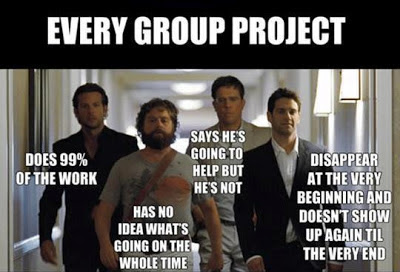
Group Project Schedule
Before beginning, students MUST complete the CITI training! https://www.citiprogram.org. I know that this is tedious and when I pulled up the weblink for you found that I have to renew mine at this time as well - so I really do feel your pain! On the plus side, if you go on to do research under a faculty member, this is required and they will really appreciate you having it :) You can also put this on your grad school applications as well!
Once completed students' will upload a copy in PDF form of their CITI training certificate.
PER IRB:
"If your plan is to teach students about the research process, have students collect anonymous, non-sensitive survey data from their peers as class projects that will be turned in for a grade, with no plan to “develop or contribute to generalizable knowledge” or publish / present results outside the classroom, then the UCF IRB would determine that this is “not human subjects research” and does not need to be submitted to the IRB for approval.
Since these students may conduct human research in the future, it will be up to you to take responsibility for teaching your students about research ethics, the voluntary nature of research participation, etc. In the event that you or a UCF student later decides to use data (that has been collected for this non-research purpose) for research, a study application and protocol would need to be submitted to the IRB".
So we do not need specific IRB approval for each groups projects, but I am asking, and will ensure, that we keep these at the level of ethical standards set by the university! I am also requiring that all PARTICIPANTS MUST BE MEMBERS OF THE UCF COMMUNITY!!!!
1) Students will randomly be placed into groups. Each group will choose an area of inquiry relevant to social psychology. Each group will then write a short paragraph on why this area of Social Psychology merits study and place it in the group wiki (please write your name). Groups can and should feel free to modify or narrow their topics after this session.
2) Each Group will then do a literature review of their topic in the library / googol scholar and locate at least 2 relevant articles per group member (again, each member will place the citation in the group wiki with their name). Each member will then write a one-page summary IN THEIR OWN WORDS of each article and put it in the group wiki for the other group members to see. Groups should focus not only on theory & results but also the methods that the researchers used. THIS WILL EVENTUALLY MAKE UP THE BULK OF THE INTRO TO YOUR GROUP PAPER.
3) At this point each group will design a ‘doable’ study that will test their hypothesis formulated in step 1. Each member of the group should be able to see each other’s ideas – comments – and participation! Each group will write up a method design that includes the materials that will be needed as well as the procedure they will follow. Groups will cooperatively write a 3-4 page detailed method plan of performing a study to test their hypothesis and put it in the group wiki for my review.
For the purpose of this group project I am requiring that students use a survey method. They should develop the survey in Qualtrics: https://ucf.qualtrics.com/
Instructor MUST approve the the survey prior to data collection!!! Please make sure that your survey has been spell checked and grammar checked!
4) Groups will begin data collection & data collection can take no more than the 1-week provided without prior permission of the instructor. The n (or number of subjects) will depend on the type of study each group designs but you should be aiming for at least 100 subjects. all PARTICIPANTS MUST BE MEMBERS OF THE UCF COMMUNITY!!!!
5) Data will be entered and analyzed using SPSS in the computer lab as a group. For groups currently taking SPSS lab they can use that instead. Groups will calculate simple statistics on their data and look for effects of gender or cohort (if applicable), and error with in their data sets. Groups will also be required to make at least 1 graph & 1 table that adequately represent their data. Please copy and paste results from SPSS into the group wiki or discussion board.
6) Groups will then write up a 2 page summary of their results. At this stage each group will share their findings and brainstorm on what the results mean again using the group discussion board in Webcourses.
7) Groups will write a 3-4 page section discussing what they think their results mean. This is also where groups will address what’s called a ‘needs for future direction’ paragraph that assesses any questions the results raise and where researchers should go from here.
8) The class will work on making a APA poster presentation of each groups study. Since everything is in Webcourses at this point this should be a copy and paste.
9) Toward the end of the semester, each group will present their study in an APA virtual poster session. Groups will also turn in their completed paper (approximately 15 typed double-spaced pages) to me in Webcourses. To avoid social loafing, you will also grade each group member on their participation over the course of the semester.
10) Each student as an INDIVIDUAL will write a brief essay (2-3 pages) on their experience as a group member & how they feel the experience differed between a virtual experience and a web based only experience.
Total: 100% / 1,000 points
After the text of any written assignment, you should include a References section, where you list the articles you reviewed and any other references you cite (but NOT references you didn’t specifically cite) in the text of your paper. Do NOT cite sources you have not read yourself. As with any paper, plagiarism is completely unacceptable.
- Journal articles
Author (Last Name, First and Middle Initials) (year). Title. Journal (in italics), Journal Volume (in italics), pages.
McDreamy, D.S. (2006). How do I cite a journal article: Like this! Journal of Citing Stuff, 1, 10-12.
- Book chapters
Author (Last Name, First and Middle Initials) (year). Chapter title. Book Editors (Eds). Book Title (pages). Publisher: City, State.
McSteamy, M.S. (2006). How do I cite a book chapter: Like this! Smith, J. and Smith, L. (Eds). I am the Book Title (10-12). Publisher’s Name: Orlando, FL.
- Books
Author (Last Name, First and Middle Initials) (year). Book title. Publisher: City, State.
Grey, M. (2006). I’m Citing a Book and This is the Title. Publisher’s Name: Oralndo, FL.
Help for writing: If you have difficulty writing and need assistance please contact the university center for writing excellence. They have the resources to help all UCF students with writing. You can take them the assignment & a rough draft & they can help with grammar & syntax and is a great resource. They even help with resumes! The UWC webpage is: http://www.uwc.ucf.edu
|
Letter Grade |
Points |
|---|---|
|
A |
93 – 100 points |
|
A- |
90 – 92 points |
|
B+ |
87 – 89 points |
|
B |
83 – 86 points |
|
B- |
80 – 82 points |
|
C+ |
77 – 79 points |
|
C |
73 – 76 points |
|
C- |
70 – 72 points |
|
D+ |
67 – 69 points |
|
D |
63 – 66 points |
|
D- |
60 – 62 points |
|
F |
59 and below |
So, I want to figure out my grade and am totally lost . . .
Let’s say these are your grades:
|
Assignment |
Percentage |
|
Discussion panel (5 discussion posts over the course of the semester including the first weeks "rules" post (20 points each - 100 points total) – 10% / 100 points |
10 |
|
Group Project (CITI training - 50 points, group paper - 150 points, group participation - 100 points (Your grade here is determined by my analysis of the group wiki / discussion board in Webcourses and group grading by peers!!! If your group feels you didn’t participate (and this will be obvious in the group wiki / discussion board… you will do quite poorly here!), group virtual poster session - 100 points - this includes your groups post as well as commenting / providing discussion in at least 3 other groups posters), reflection paper group grading - 100 points – 50% / 500 points |
50 |
|
Exercises (reading a research article, Does the IAT measure prejudice, Loftus exercise - 10% / 100 points |
10 |
|
Class Activities (In class Participation (operational definition activity, buzz group activity, violate a social norm, read Rosenhan article activity, prisoners dilemma activity - 40 points each) – 20% / 200 points
|
20 |
|
Quizes/Obojobo - 10% or 100 points ......
|
10 |
Here’s the formula: Discussion Panels (out of 100 points) + Group Research Project (out of 500 points) + exercises grade (out of 100 points) + Class Activities (out of 200 points) + Quizzes / Obojobo (out of 100 points) + any extra credit
Grading FAQ’s
- What should I do if I have an excused absence for a regular class period? You should make sure that you get the notes from someone in class. You should also check with me as if I showed a video that day I will make arrangements with you to come see it.
- What happens if I go to turn in my assignment but it’s after the assignment has closed? You will not get credit for it. The assignments are all posted as of the first day of class, thus – no excuse!
- What happens if I go to do my assignment but the web page isn’t working, or the library computer won’t upload? This is a great question. Due dates do not change because of a technology fluke (whether it be your personal internet that is down or the website itself has gone offline). You still need to submit the work prior to the due date & time! For this reason I suggest you do not wait until the last minute to complete these assignments. Late papers / work will not be scored.
Course Summary:
| Date | Details | Due |
|---|---|---|